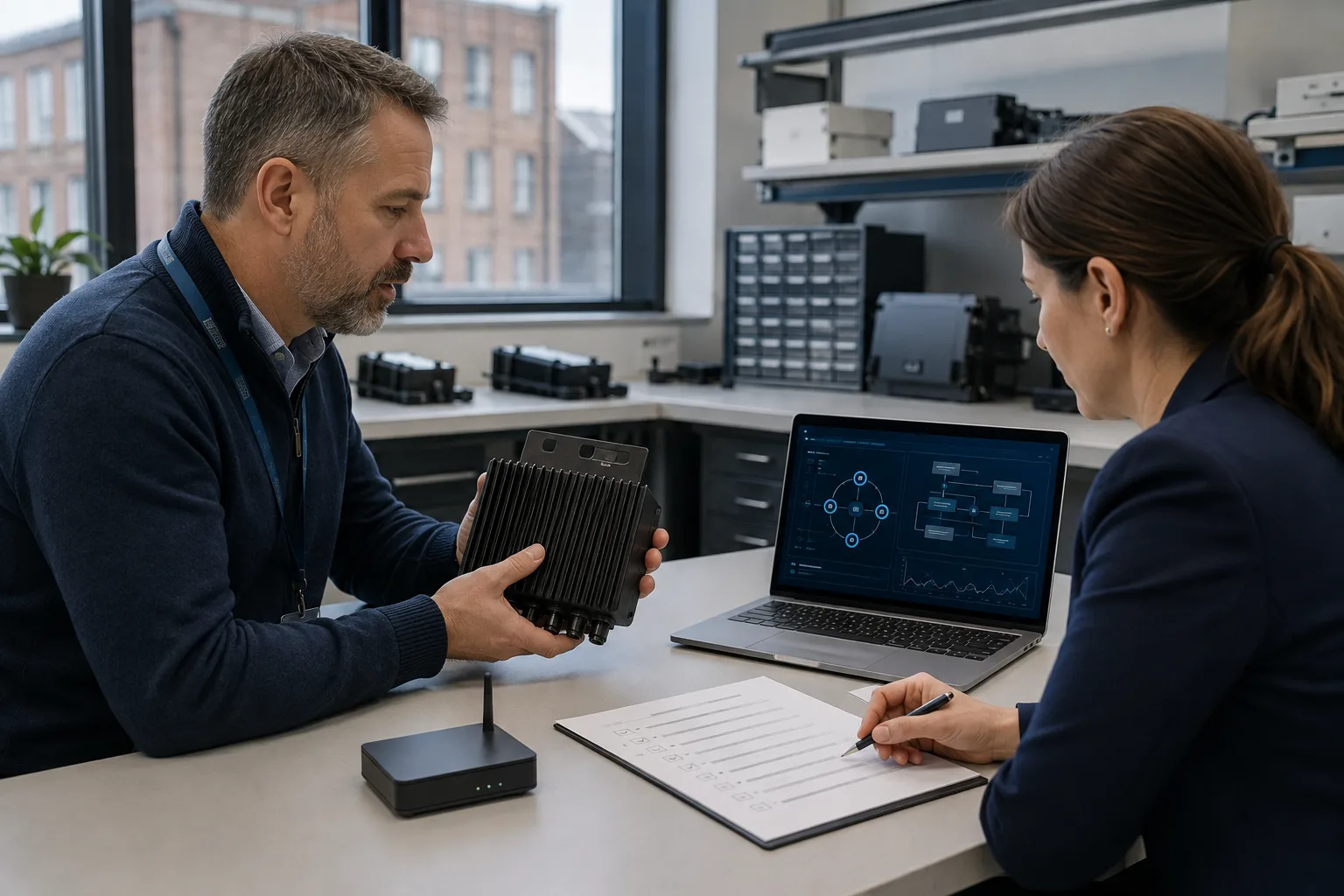
Germany Stromspitzengesetz: What Microinverter Suppliers Should Confirm
A B2B quotation checklist for German small-PV projects covering controllability, meter interfaces, temporary export limits and network-operator evidence.

TMG Technical Team
Grid Integration
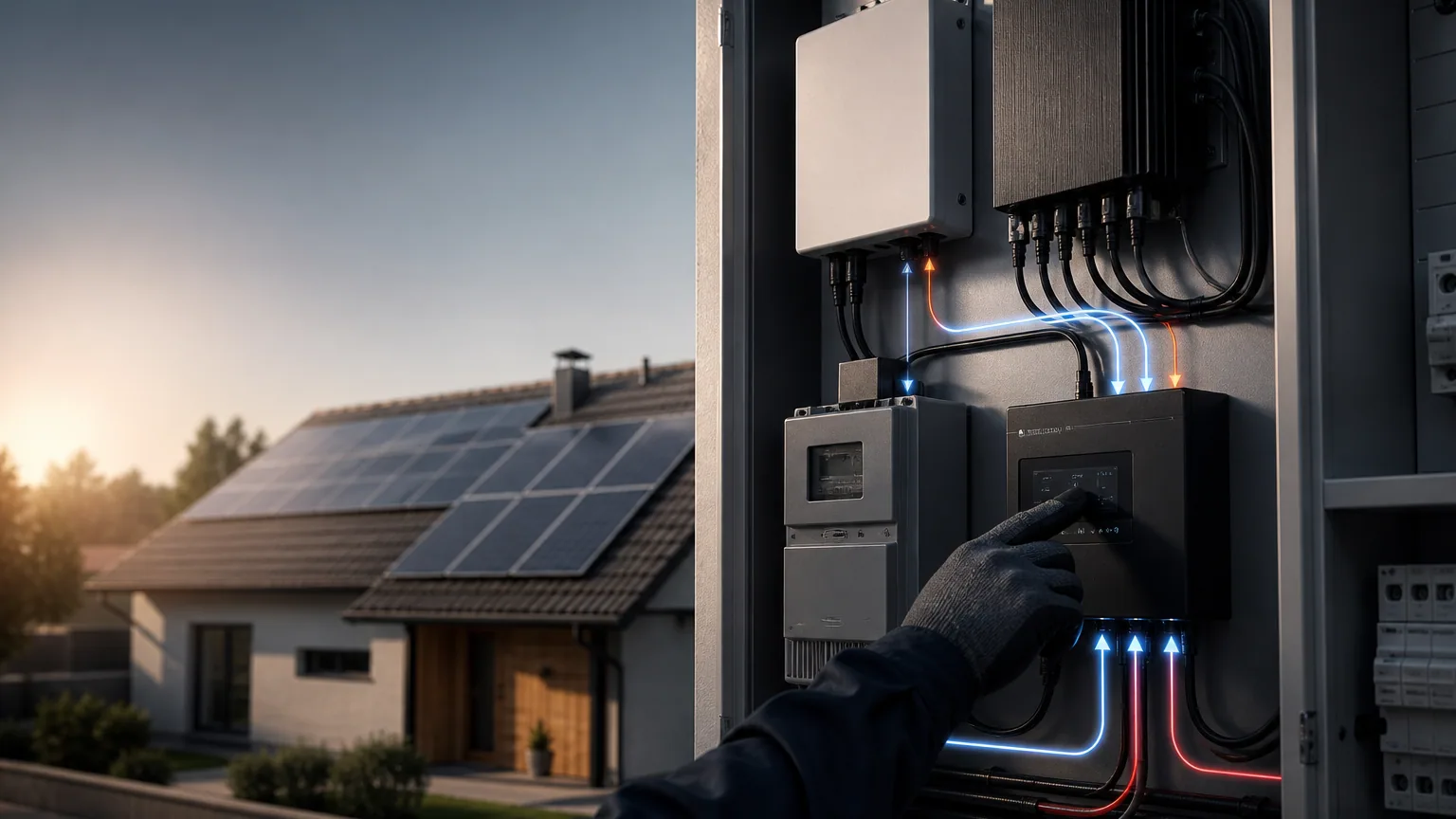
Germany's 2025 changes commonly discussed as the Stromspitzengesetz affect how new PV projects are planned around metering, controllability and feed-in behavior. For a microinverter supplier, the key task is not to interpret a headline—it is to identify which product functions and documents the installer needs for the exact system and commissioning date.
Freeze the project facts before selecting hardware
Record commissioning date, installed PV capacity, existing generation/storage, network operator, meter status, chosen remuneration route and whether controllable equipment is required. The German Renewable Energy Sources Act (EEG) contains the binding rules; Bundesnetzagentur guidance explains implementation topics for small installations.
Requirements can depend on system and metering conditions. Avoid publishing a universal power limit or assuming every balcony and rooftop project follows the same route.
Distinguish inverter control from site control
A microinverter may expose active-power controls, but the project may also require a meter, communication path or external controller. Draw the complete path from measurement at the grid connection point to the command received by generating equipment.
| Project question | Supplier evidence |
|---|---|
| Can output be limited? | Supported command/mode and resolution |
| How is the command delivered? | Protocol and topology diagram |
| What happens on communication loss? | Documented fallback behavior |
| Is measurement at the PCC supported? | Compatible meter/controller list |
| Which firmware is required? | Version and change-control record |
| How is commissioning proven? | Parameter export or test procedure |
Do not represent a per-device application slider as a compliant plant-control scheme unless the responsible network operator accepts that architecture.
Coordinate export management and grid profile
Site export control, statutory controllability and grid-support functions can overlap technically but are not interchangeable. The anti-backflow guide explains measurement placement and fail-safe design. The approved German grid profile still needs separate evidence under the applicable connection rules.
Confirm phase allocation, aggregate generation and any existing battery system. Use the grid voltage and phase quotation guide so the control discussion is tied to the actual point of common coupling.
Build a German-market document pack
Provide the exact model datasheet, wiring diagram, interface description, compatible equipment list, grid-code evidence, German instructions, firmware identification and commissioning procedure. If a third-party energy-management system is required, define responsibility for integration and testing.
The distributor should keep a change log because meter infrastructure, network-operator processes and product firmware can evolve during a rollout. Reconfirm the project route before shipment rather than relying on an earlier quotation.
Use conditional wording in the offer
A defensible offer states the assumed commissioning route, meter/control architecture and open network-operator items. It does not promise eligibility for remuneration or legal compliance based only on inverter capability.
This article is a technical procurement guide, not German legal or tax advice. Send the site capacity, commissioning schedule, network operator, meter plan and required control interface through TMG Contact. TMG can map product functions to the requested architecture while the installer and network operator confirm the applicable procedure.
Sources & further reading
- https://www.gesetze-im-internet.de/eeg_2014/BJNR106610014.html
- https://www.bundesnetzagentur.de/DE/Fachthemen/ElektrizitaetundGas/ErneuerbareEnergien/EEG_Aufsicht/MiSpeL/artikel.html
Last reviewed May 29, 2025.