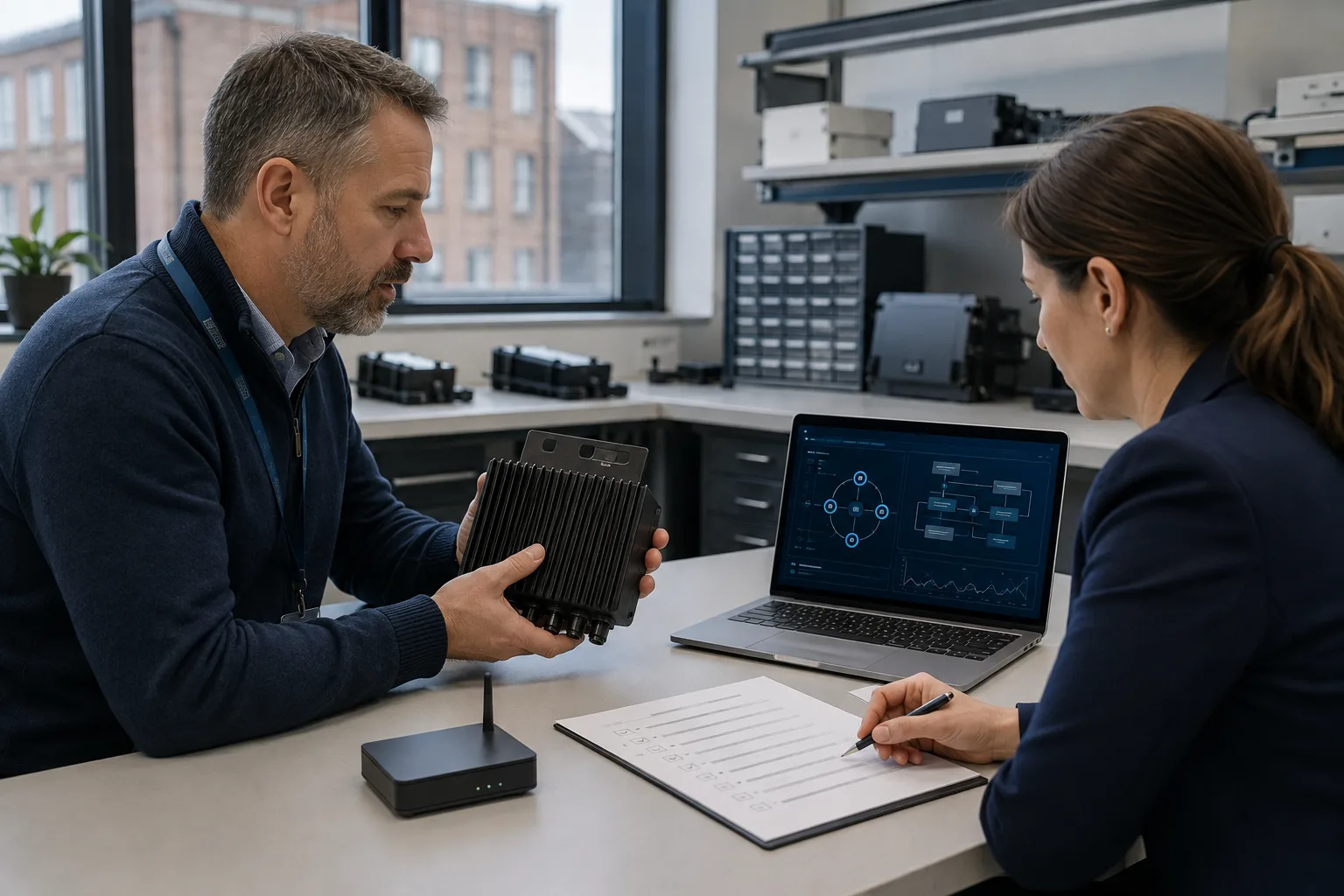
NEC Rapid Shutdown: Evidence to Request from a Microinverter Supplier
A US-market RFQ checklist for system boundaries, initiation methods, listings, labels and exact component combinations used in PV rapid shutdown.

TMG Technical Team
Compliance Engineering
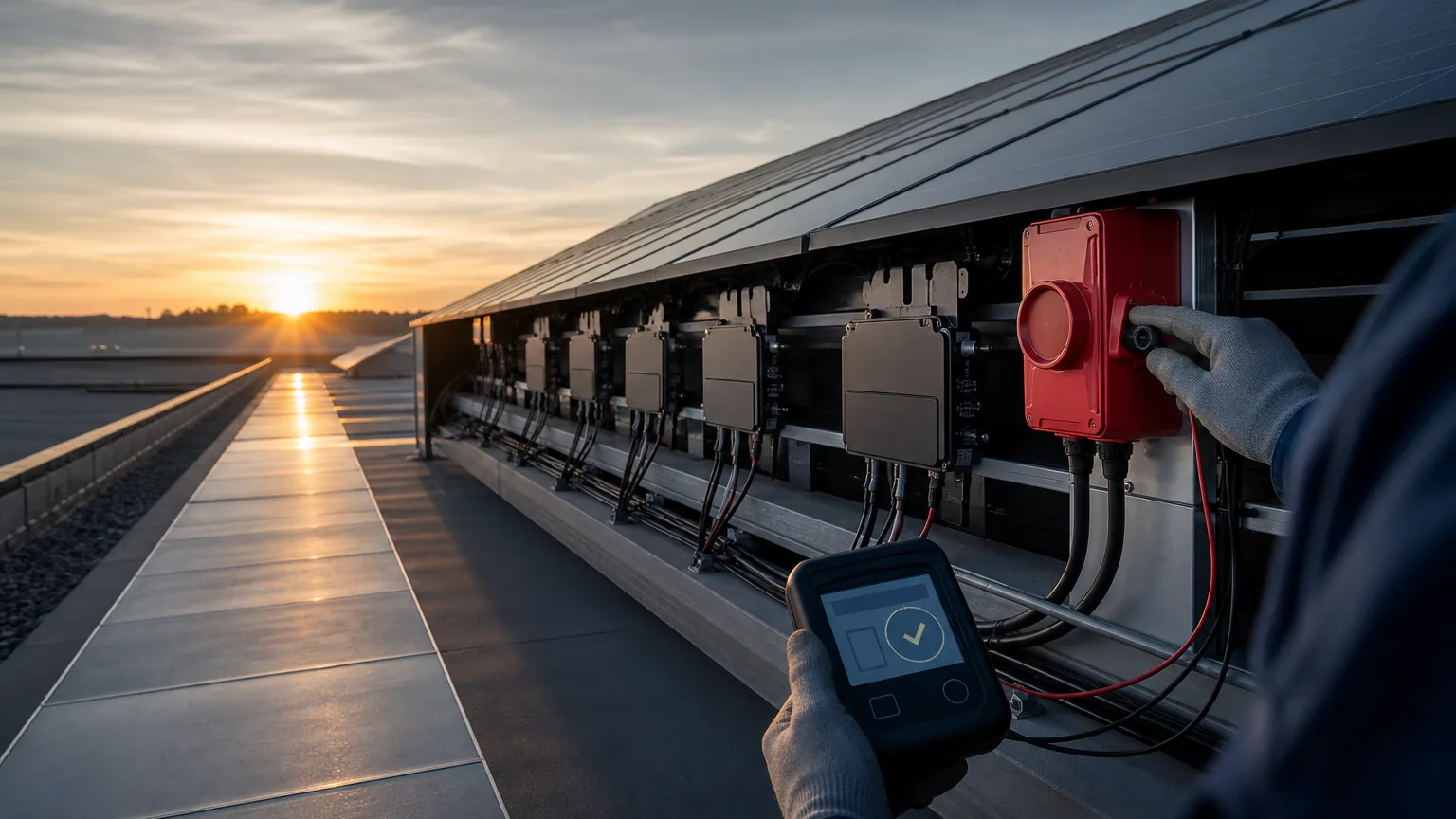
Microinverters can reduce the energized DC circuit length associated with a conventional string inverter, but procurement should not turn that architectural benefit into an unsupported compliance claim. The accepted rapid-shutdown solution is a system defined by the applicable NEC edition, product listing, installation instructions and authority having jurisdiction.
Identify the adopted code and project scope
The National Electrical Code is adopted and amended by jurisdictions on different schedules. Record state/local authority, adopted edition, building type, array location and whether the PV circuits fall within the rapid-shutdown scope.
Do not quote a universal threshold or boundary from memory. Confirm the text accepted by the AHJ and the edition referenced by the product evidence.
Map the complete shutdown system
Create a diagram showing modules, microinverters, AC trunk/branch wiring, combiner or panel, initiator, service equipment, communications and any energy storage. State which conductors remain energized and what action starts shutdown.
NREL has documented that module-level inverter architectures can inherently support rapid-shutdown objectives by avoiding long high-voltage DC circuits. That design logic still needs model-specific evidence and compliant installation.
| RFQ item | Evidence to request |
|---|---|
| Exact inverter model | Listing/certificate and installation manual |
| Rapid-shutdown function | Manufacturer system statement |
| Initiation device | Listed component and wiring diagram |
| Compatible accessories | Controlled part-number list |
| Time/voltage behavior | Report or listing scope |
| Required labels | Manual and project drawing |
| Failure behavior | Documented shutdown sequence |
Verify the listing scope
Match manufacturer, model, hardware and firmware where applicable. Confirm which gateway, transmitter, disconnect, combiner or accessory versions are required. A certificate for one component is not automatic approval of a mixed-brand system.
Request the current installation instructions referenced by the listing. Field substitutions, extended cable assemblies or different initiation wiring can move the project outside the evaluated configuration.
Coordinate AC isolation and emergency operation
Rapid shutdown is not the same as utility anti-islanding, overcurrent protection or normal service isolation. The anti-islanding evidence guide covers grid-loss behavior separately.
The design should identify the responder-facing initiator, its location and labeling, how multiple PV systems or batteries are handled, and what state remains after operation. The AHJ and responsible designer decide the final arrangement.
Commission without unsafe improvisation
Follow the listed manufacturer's procedure. Record serial numbers, component versions, initiation method, measured or indicated result, restoration sequence and test instrument details. Do not create live faults or bypass interlocks to simulate an emergency.
Provide the owner with the shutdown diagram and inspection record. If a component or firmware changes, assess whether the evidence and commissioning test remain valid.
Use a conditional US-market quotation
The RFQ response should list the proposed system components and explicitly state that final acceptance depends on the adopted NEC edition, AHJ review and installation to the listing instructions.
Send the jurisdiction, one-line diagram, module layout and required listing information through TMG Contact. TMG can organize the model-specific technical pack before a US distributor releases an order.
Sources & further reading
- https://docinfofiles.nfpa.org/files/AboutTheCodes/70/70_A2025_NEC_P04_PISubmittals.pdf
- https://www.nrel.gov/docs/fy17osti/68925.pdf
Last reviewed January 9, 2025.