EU WEEE for Microinverter Distributors: Registration, Labels and Take-Back
A country-by-country producer-responsibility workflow for importers and private-label distributors placing microinverters on the EU market.

TMG Technical Team
Compliance & Supply Chain
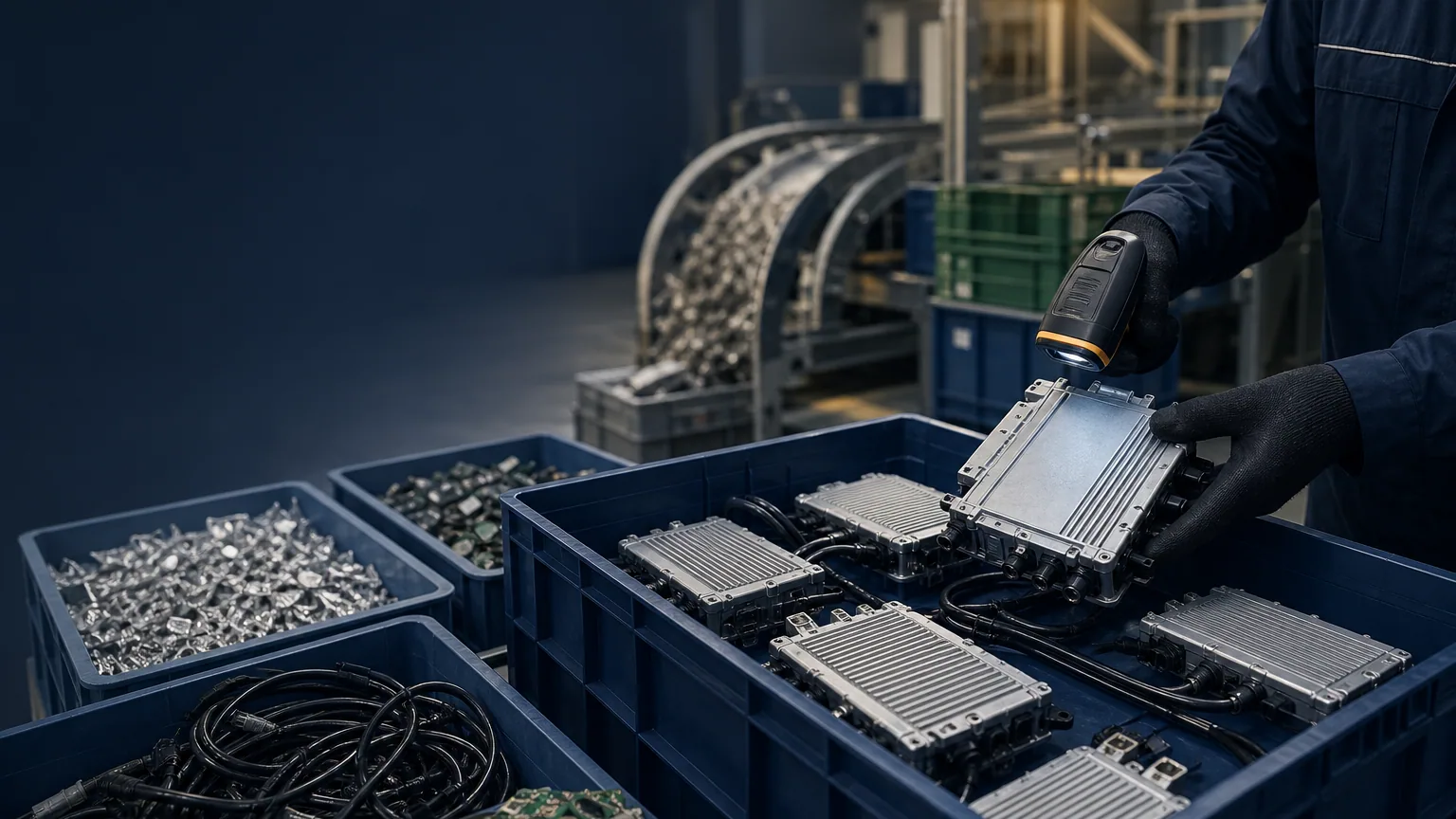
CE marking does not close an EU microinverter launch. Waste electrical and electronic equipment obligations can require registration, reporting, financing and take-back arrangements in every country where the business places equipment on the market.
The responsible “producer” under national WEEE implementation may be the manufacturer, importer, distance seller or private-label company depending on the supply chain. Confirm the role before the first sale.
Map legal entities and sales routes by country
Create a matrix of EU destination, seller of record, importer, brand owner, local distributor, B2B/B2C channel and distance-selling route. Your Europe states that businesses must register with national WEEE authorities in each country where they sell covered equipment.
One registration number is not an EU-wide passport. National categories, authorized-representative rules, fees and reporting formats can differ.
| Market file | Evidence to retain |
|---|---|
| Producer-role decision | Entity and supply-chain rationale |
| National registration | Number and effective date |
| Scheme/guarantee | Contract and financing method |
| Product category | Written classification |
| Sales reporting | Units/weight by market and period |
| Take-back route | Customer and distributor procedure |
| Label artwork | Approved symbol/date marking |
Check product and packaging markings
Covered electrical equipment generally carries the crossed-out wheeled-bin symbol. Official EU guidance explains the symbol and the bar/date convention for equipment placed on the market after 13 August 2005. Verify size, visibility, permanence and whether the marking belongs on the product or, where permitted, associated documentation/packaging.
Do not modify artwork independently in each country. Maintain a controlled label matrix linked to exact product and packaging revisions.
Build reporting data into operations
The distributor needs reliable placed-on-market data by legal entity, country, category, unit count and weight. Freeze net product weight and clarify whether accessories, gateways, cables and packaging are reported separately under applicable schemes.
Reconcile ERP sales records with returns, replacements and exports. Assign an owner for filing calendars and retain submission receipts. A late spreadsheet assembled from invoices is a weak compliance control.
Design take-back and end-of-life support
Document how professional customers request collection, where returned units go and how data-bearing devices are handled. Distributor take-back obligations may also apply. Contract only with authorized collection/recycling routes in the relevant market.
Warranty replacement and WEEE treatment are different processes, but the logistics should connect. The warranty due-diligence guide helps define failure returns without confusing them with end-of-life waste.
Put WEEE terms into supplier agreements
Allocate responsibility for weights, material data, labels, manuals, recycling information and change notification. A private-label distributor should not assume the overseas factory holds national registrations on its behalf.
Audit registrations before renewal and before entering a new country. Keep legal advice and scheme confirmations because national implementation changes.
This is an operational procurement guide, not legal advice. Send the brand, sales entities, destination countries and product pack list through TMG Contact. TMG can supply product data and controlled artwork inputs while the EU economic operator completes country-specific registrations.
Sources & further reading
- https://europa.eu/youreurope/business/product-rules-compliance/recycling-waste-management/weee-responsibilities/index_en.htm
- https://europa.eu/youreurope/business/product-rules-compliance/recycling-waste-management/weee-label/indexamp_en.htm
- https://eur-lex.europa.eu/eli/dir/2012/19/2024-04-08/eng
Last reviewed September 3, 2025.