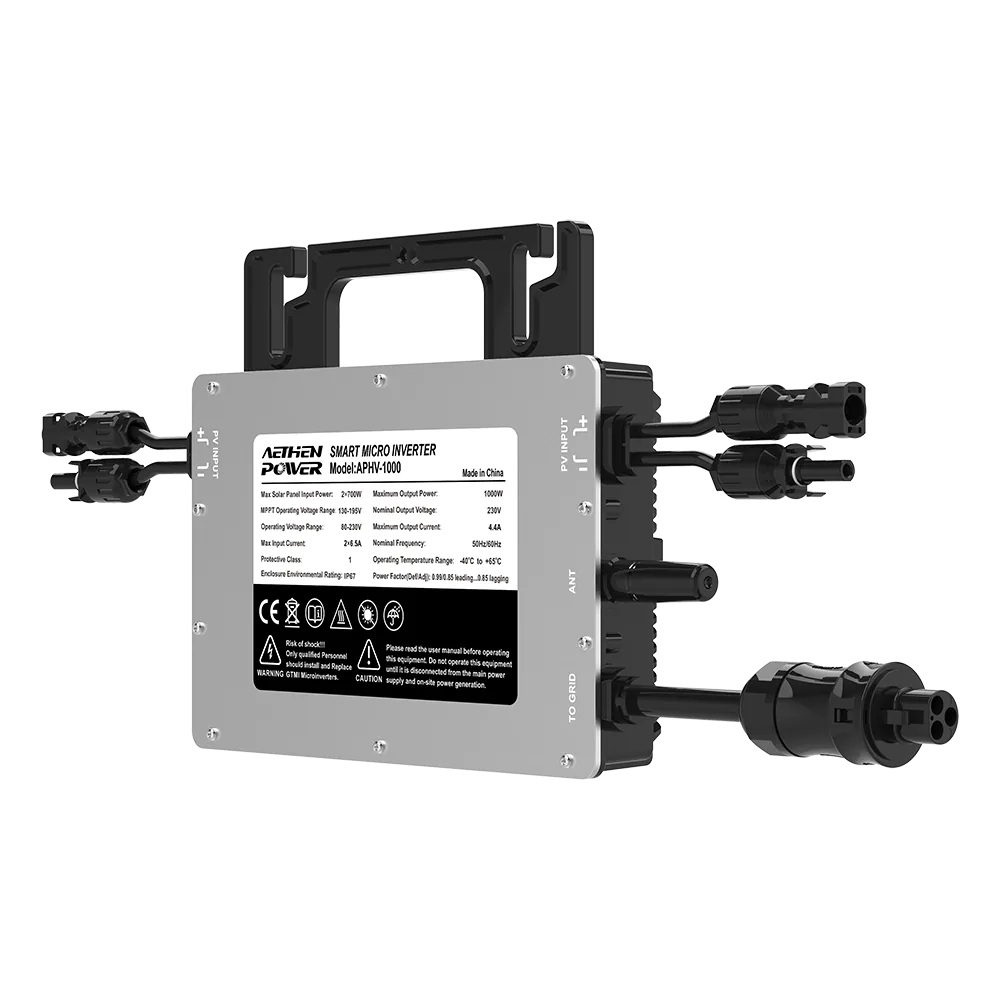
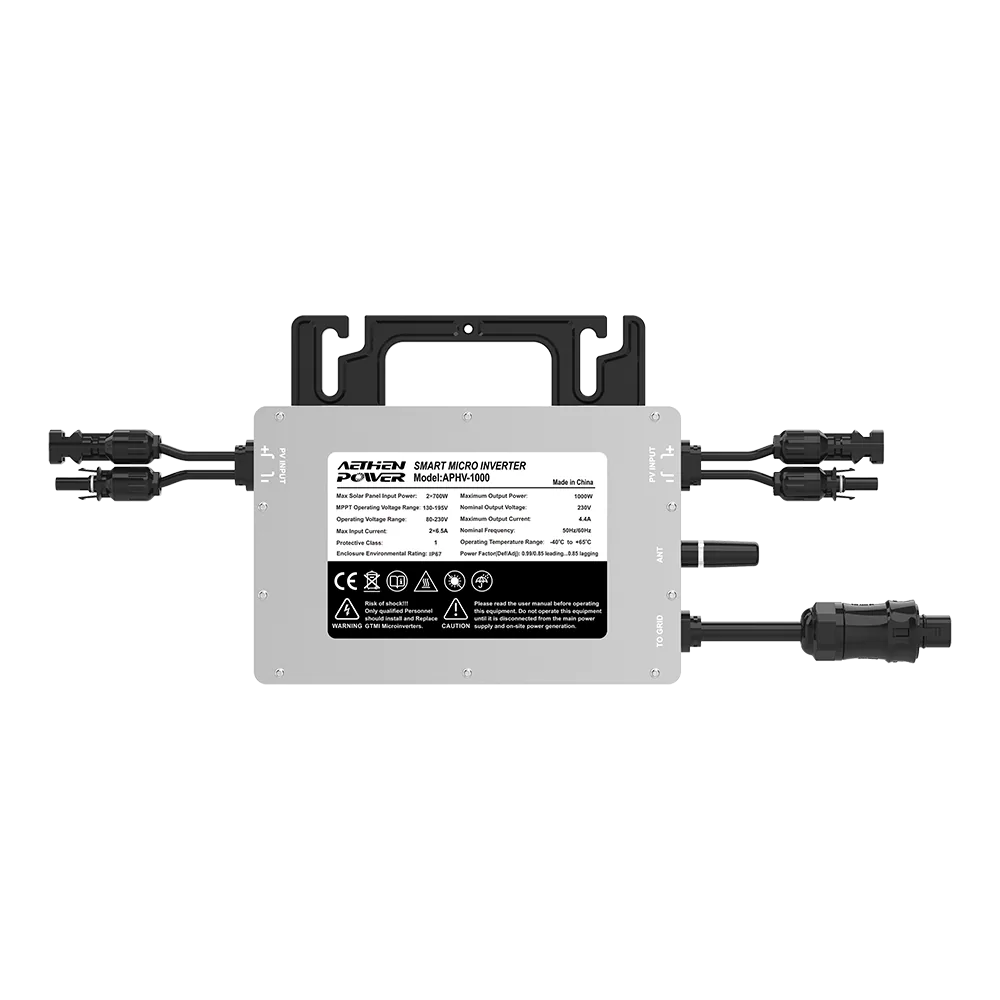
APHV high-voltage microinverter for specialty photovoltaic module evaluation

Module Manufacturer Support

High-Voltage Microinverters for Perovskite and Thin-Film Modules

APHV provides two independent high-voltage PV inputs for modules whose voltage and current architecture differs from conventional low-voltage crystalline products. Compatibility must still be proven from the exact module datasheet and operating extremes.

PV operating window

80–230 V DC

Independent inputs

2 per APHV unit

Current range by model

2 × 9 A to 2 × 13 A maximum input

Qualification boundary

A useful starting point, with the unknowns left visible.

“Perovskite” or “thin film” is not a compatibility approval. Final selection requires Voc, Vmp, Isc, Imp, temperature coefficients, connector details and the intended grid profile.

Match the module as an electrical device, not a technology label

The first review checks the full module envelope at the temperatures and irradiance conditions expected in the intended product.

DecisionStarting pointConfirm before release
Voltage windowAPHV working range 80–230 V; starting voltage above 80 VCold-corrected Voc and operating Vmp remain inside the documented limits
Input currentAPHV-700/800/1000: 2 × 9/10/13 A maximum inputImp and Isc against the exact model and required design margin
Power pairing2 × 435 W, 2 × 500 W or 2 × 625 W maximum input by modelExpected irradiance, clipping target and thermal environment
Mechanical interface230 × 200 × 42 mm APHV enclosureMounting, cable routing, connector family, ventilation and service access

Relevant platforms

Start the model review here.

APHV Series

High-voltage grid-tied microinverter

APHV Series

The APHV series is designed for high-voltage, low-current PV architectures using crystalline silicon, perovskite and other thin-film modules. Two independent PV inputs, 80–230 V operation and intelligent anti-backflow control create a compact 700–1,000 W grid-tied platform.

Technical data and models →

Review output

What the first engineering response should contain.

  • Electrical compatibility worksheet
  • Recommended APHV starting model
  • Input-to-module allocation diagram
  • Open connector and mechanical interface items
  • Sample validation and data-capture plan
01

Provide the complete module datasheet

Include temperature coefficients, connector specification and expected module operating environment.

02

Review the operating envelope

Check voltage, current, power, startup and thermal boundaries for each independent input.

03

Validate the combined sample

Capture startup, MPPT behavior, conversion, thermal state, monitoring and controlled grid-profile evidence.

Buyer questions

Frequently asked questions

Is every perovskite or thin-film module compatible with APHV?

No. Cell technology alone does not determine compatibility. The exact electrical envelope, connectors, insulation design and intended grid configuration must be reviewed.

Can two different module orientations use the two inputs?

The APHV platform has two independent PV inputs, but the proposed module allocation and operating envelope should be reviewed for the actual layout.

Can TMG support a module manufacturer sample program?

Yes. Start by sharing the controlled module datasheet, prototype quantity, test objectives, target market and required mechanical interface.

Project RFQ

Send enough data for a useful answer.

The form is routed to sales@tmgteck.com. We will use your module, market and quantity data to prepare a preliminary configuration review.