How to Survey Partial Shading Before Quoting a Microinverter System
A field-data workflow for EPCs estimating obstruction timing, module-level impact and realistic yield without overselling shade tolerance.

TMG Technical Team
Applications Engineering
Microinverters isolate the electrical effect of a shaded module from other module-level channels, but they do not make shade disappear. A useful quotation needs a time-based obstruction survey, module layout and transparent energy assumptions.
NREL testing has shown that module-level power electronics can improve yield relative to a reference string architecture under defined shading cases. Those test percentages should not be copied as a guarantee for another building. Shade geometry, bypass-diode behavior, minimum operating voltage and weather all change the outcome.
Record shade as a moving condition
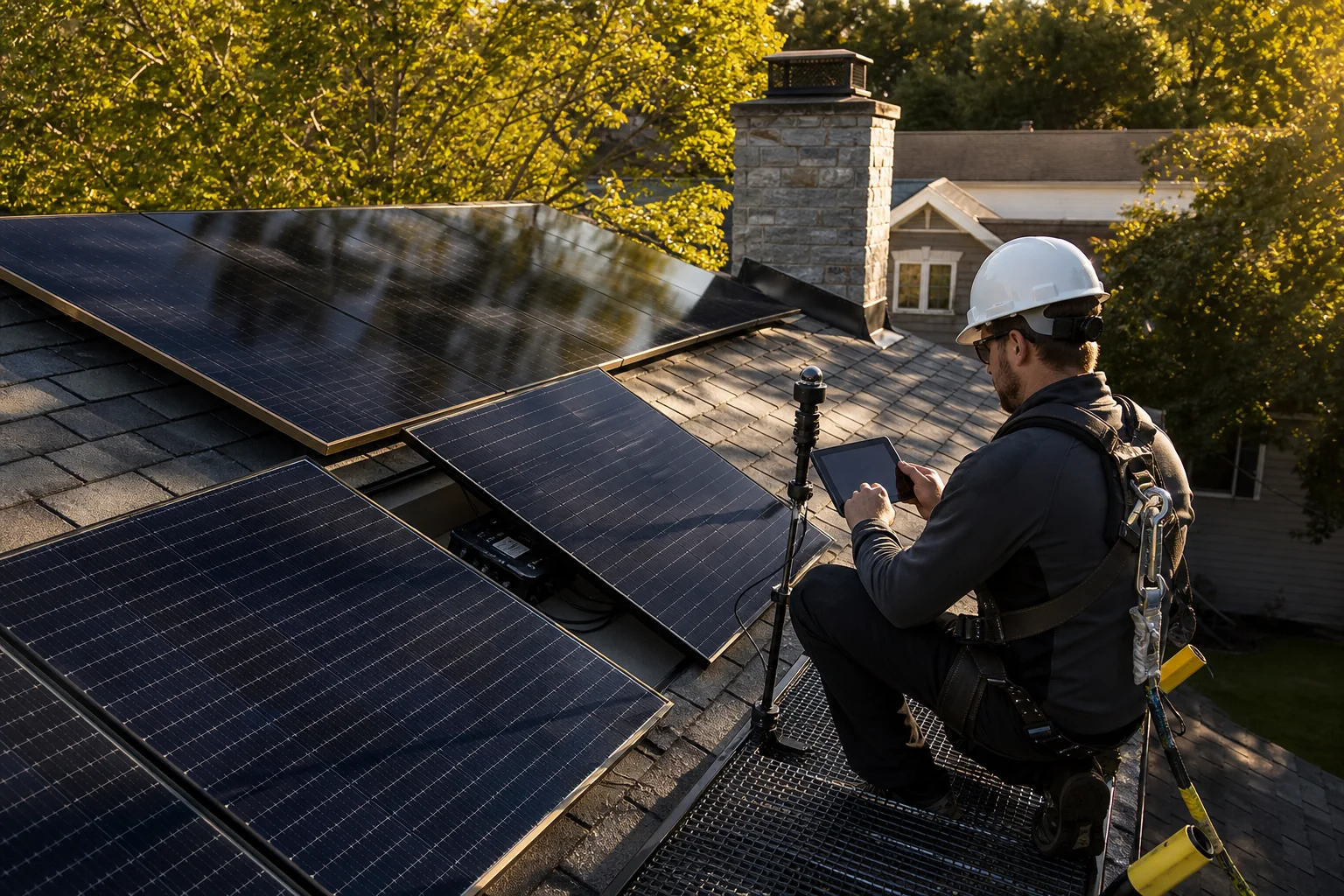
Visit the site or obtain a qualified solar-access survey. Identify buildings, railings, chimneys, vegetation, antennas and self-shading. Record when each obstruction reaches each proposed module area across representative seasons.
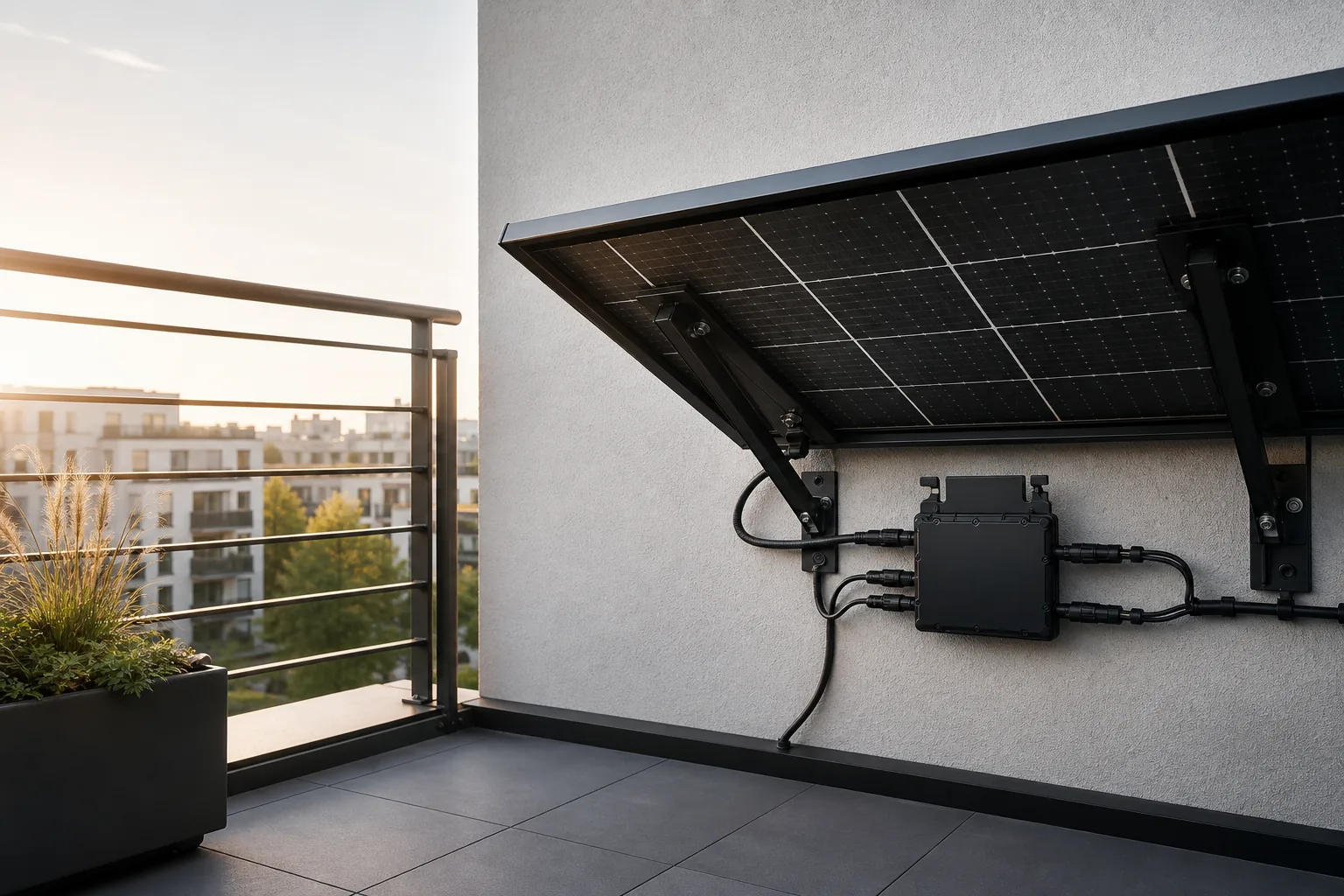
For balcony systems, include the railing, floor slab above, side walls and furniture. A photograph at noon does not capture morning, afternoon or winter sun paths.
Map shade to electrical channels
Create a plan showing which module connects to each MPPT input. Then determine whether shade covers a few cells, a substring or most of a module; whether module voltage may fall below the inverter threshold; and whether different orientations remain on independent channels.
Microinverters prevent one module from setting the operating point of every other independent module, but the shaded module can still lose substantial output.
Build a reproducible energy case
Document the weather source, obstruction data, module model, inverter behavior, orientation, soiling and availability. Keep shading separate from clipping and export curtailment; see the DC/AC ratio guide.
| Evidence | Weak quotation | Better quotation |
|---|---|---|
| Shade input | “Some afternoon shade” | Time- and location-based record |
| Layout | Total module count only | Module-to-input map |
| Yield | One annual number | Base case plus sensitivity |
| Claim | “No shade loss” | Isolation benefit with residual loss |
Reduce shade before optimizing electronics
Move modules away from persistent obstruction where possible. Adjust spacing, orientation or mounting height within structural and planning limits. Electronics cannot recover irradiance that never reaches the cells.
Give the owner the module map and expected shade periods. Monitoring differences are not automatically faults; orientation, temperature, soiling and shade all matter.
Use TMG's application examples to define the physical context, then send the layout, module datasheet and obstruction survey through TMG Contact. The proposal should state residual shade risk instead of promising an unqualified yield uplift.
Sources & further reading
- https://docs.nrel.gov/docs/fy12osti/54876.pdf
- https://www.energy.gov/cmei/systems/solar-integration-inverters-and-grid-services-basics
Last reviewed April 3, 2025.