
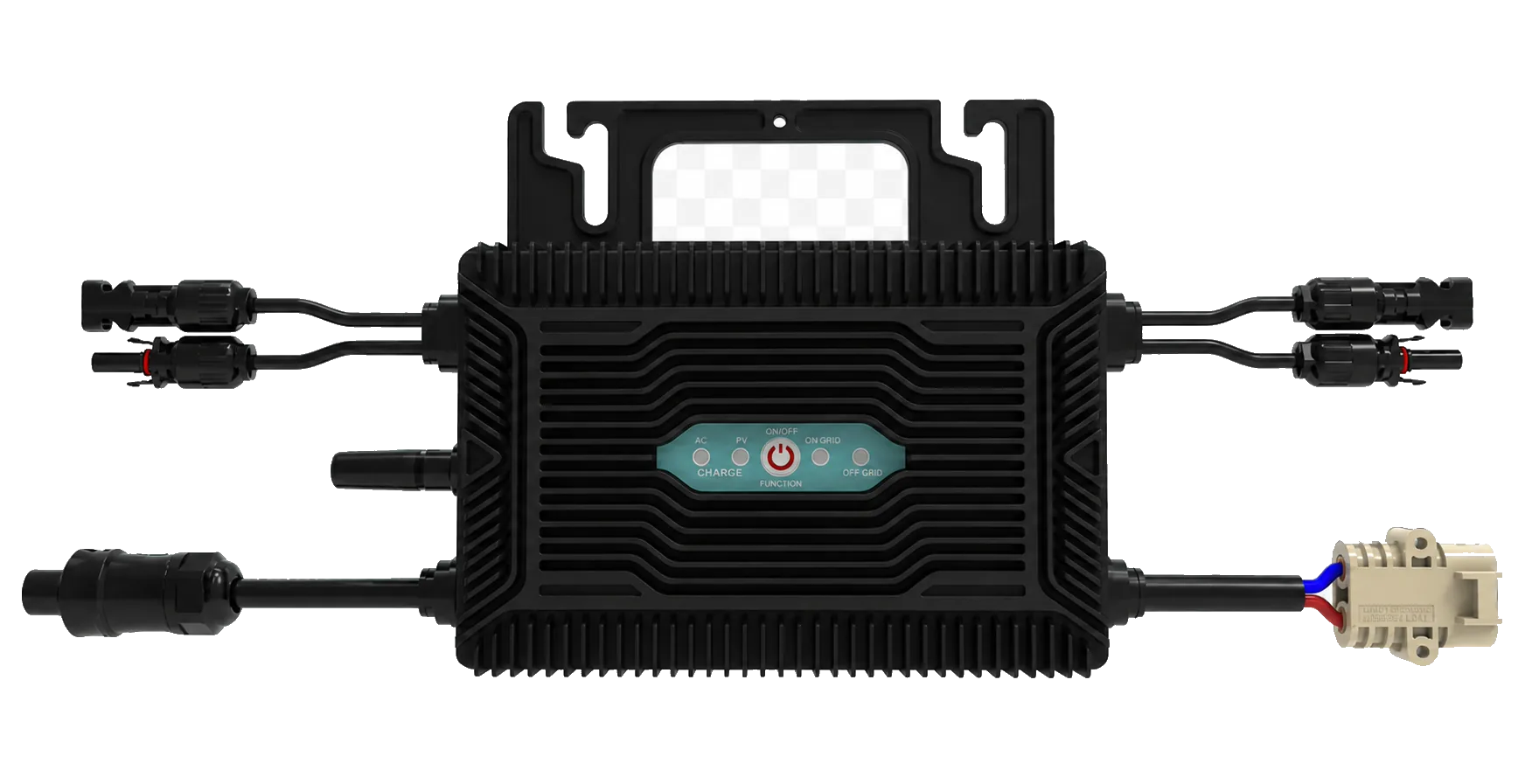
Residential hybrid microinverter and battery backup application

Hybrid System Integrators

Hybrid Microinverters for Battery Backup Projects

APLV combines grid-tied conversion, an independent off-grid output, PV battery charging and scheduled AC reverse charging. A safe quotation still requires the battery interface, load profile, protection and operating sequence to be defined by the project team.

Rated output family

400–4,000 W

PV MPPT window

16–60 V DC

Off-grid operating input

24–60 V DC

Qualification boundary

A useful starting point, with the unknowns left visible.

This page does not approve a battery model or promise whole-home backup. Battery voltage, BMS behavior, protective devices, transfer arrangement and surge loads require project-specific engineering.

Separate the PV, battery, grid and load decisions

A hybrid configuration is approved by interfaces and operating states, not by matching two products with similar nominal voltage labels.

DecisionStarting pointConfirm before release
PV inputAPLV model selected from module count and powerCold Voc, Vmp, current, clipping and input allocation
Battery interfaceLow-voltage APLV architectureBattery range, BMS/control interface, current limits, protection and approved cable
Backup loadIndependent off-grid output capabilityContinuous watts, surge, starting sequence, neutral/earthing and critical-load panel
Grid operation230 V platform with anti-backflow supportLocal grid profile, export rule, metering and fail-safe response

Relevant platforms

Start the model review here.

APLV Series

Low-voltage hybrid microinverter

APLV Series

The APLV series combines grid-tied output, independent off-grid output, PV battery charging and scheduled AC reverse charging. Its DAB dual full-bridge topology, full isolation and 16–60 V MPPT range support flexible residential, balcony and distributed energy designs from 400 W to 4,000 W.

Technical data and models →

Review output

What the first engineering response should contain.

  • Operating-state diagram
  • PV and preliminary APLV model check
  • Battery-interface question list
  • Critical-load and surge worksheet
  • Protection, metering and commissioning open-item register
01

Define required operating states

State what must happen with grid present, grid lost, low battery, full battery and communications lost.

02

Match interfaces and loads

Review PV, battery and load data against the exact APLV model and external protection design.

03

Validate a controlled prototype

Test transition behavior, charge paths, alarms, load surge and recovery within an approved procedure.

Buyer questions

Frequently asked questions

Does APLV work with any 48 V battery?

No blanket compatibility is stated. The exact battery operating range, current, BMS behavior, protection and cable interface must be reviewed.

Can one APLV unit back up an entire house?

Backup scope depends on the selected model and the measured continuous and surge loads. A qualified designer should define a critical-load circuit and operating sequence.

What data is needed for a preliminary selection?

Send the PV module datasheet, battery datasheet, load schedule with surge values, grid details, desired operating modes and target market.

Project RFQ

Send enough data for a useful answer.

The form is routed to sales@tmgteck.com. We will use your module, market and quantity data to prepare a preliminary configuration review.